
WHCA at Work Amongst the Trees
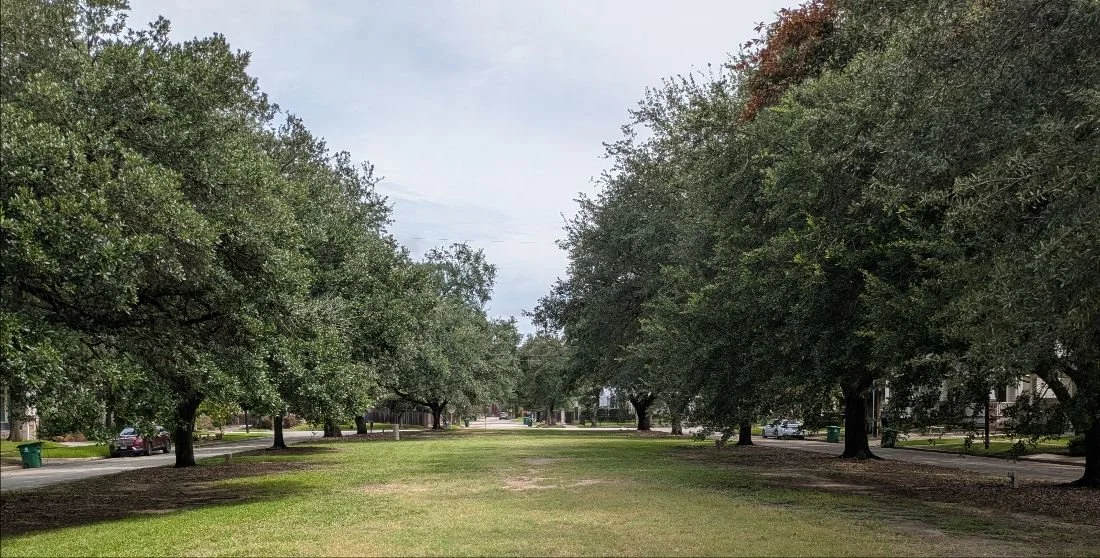
This is another in a series detailing some of the largely unseen things that WHCA does for the neighborhood. This time we’ll consider the case of the trees on the Norhill Esplanade. It’s been noted that they are in need of trimming. WHCA has officially adopted the Norhill Esplanade, which means we’re responsible for its maintenance. The fact that we’re well into hurricane season gives some people a sense of urgency about this.
You’d think this a simple matter. Call a contractor. Get it done! Ryan Taylor, WHCA Director of Beautification, takes charge of the matter, getting a quote from an arborist. Alas, that quote comes in at around the price of a good used car!
At this point it’s good remind you that the WHCA is a Civic Association. Not a Homeowners Association. Membership in a civic association is voluntary, and the membership dues are small, just $20-50/household/year. In contrast, membership in an HOA is mandatory and their fees are significant, often more than $1k/household/year. The natural consequence of this is that WHCA simply cannot afford to spend $20k+ on trimming trees. We must find another way.
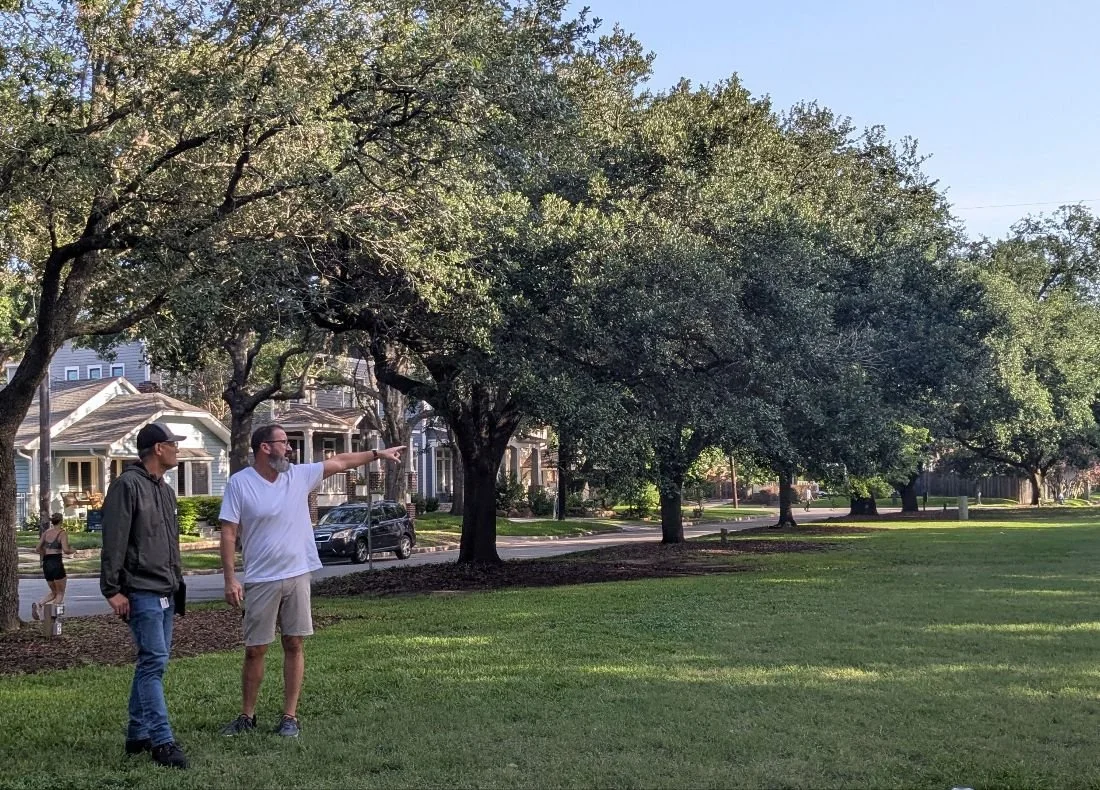
While not well-resourced, we are resourceful. We reach out to the office of the city forester at the Houston Parks and Recreation Department. They are charged with supporting the trees across the entire city. They routine engage contractors to trim trees. Ryan, Stella & I meet with one of the forestry staff on the esplanade to survey the situation.
He agrees that it needs to be done. They will put the Norhill Esplanade in their queue. We also agree upon the nature of the work, to ensure that the trees are appropriately trimmed. On this basis, HPARD will, at some point in the future, have a contractor trim the trees.
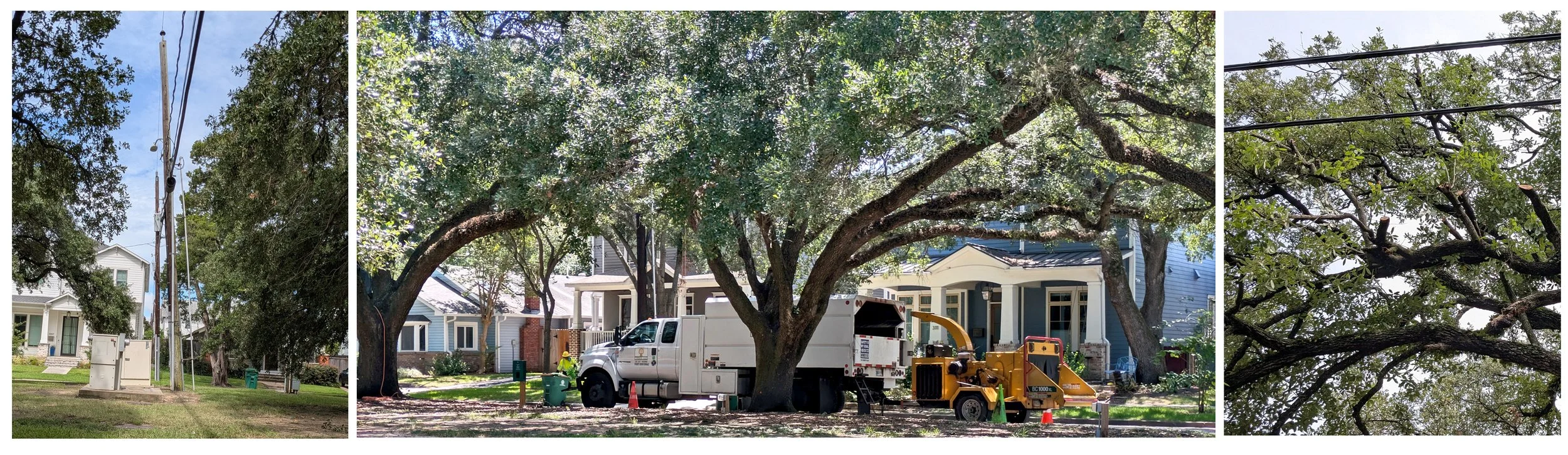
But wait! We’re not done yet! There are two CenterPoint power lines that traverse the Norhill Esplanade. By law, HPARD staff or contractors cannot trim near power lines. So naturally, we reach out to CenterPoint. A flurry of emails ensue.
Tim Yurick, Manager of Vegetation Management, reaches out to Onyekachi Ejim, Senior Forester, who advises that “…4 spans of tree trimming needed for this location. We will address as soon as we have a work order available.”
At this point, we’ve done all we can. We wait.
To their credit, CenterPoint acted swiftly. They had Trees, Inc do the work only a week of two following this initial engagement. We’re still waiting and hoping for HPARD to take care of the rest.
PS – Thanks to neighbor and former WHCA board member Stacey Kmetz, who works at CenterPoint, for connecting us with the right people at the company.